Key Takeaways: Planning Your Wedding Wine List
For a moderate reception, start your wedding wine list at about half a bottle per adult drinking guest, then adjust for the hours and other drinks available.
- Selection: Choose 2 to 4 wines that suit your menu and season.
- Timing: Buy 2 to 3 months ahead once the venue approves.
- Storage: Store the bottles in a cool and dark place.
- Planning: Plan quantities, buying deadlines, storage, and chilling before choosing labels. A short, well-organized list is easier to buy and serve.
Wedding Wine Calculator
Skip the math: plug your numbers into our calculator. Then use the steps below to choose wine for wedding celebrations and protect your order.
Your wedding wine order
Each box is a case of 12, filled by style.
Where it waits until the day
How we calculate: guests × hours × drinks per guest per hour (light 0.75, average 1, lively 1.25) × wine's share of the bar (wine only 100%, beer and wine 60%, full bar 50%) ÷ 5 glasses per bottle, rounded up, plus a 10% buffer. A separate toast is guests ÷ 7 pours per bottle, plus 10%. Red, white and rosé are split by season. Exclude guests who won't drink alcohol.
Start with the basics: guest count, hours, bar style, and budget
Estimate wine’s share of the drinks order. Do not automatically halve bottles when cocktails are available.
Still-wine formula: adult drinking guests × hours × expected total alcoholic drinks per guest per hour × wine share ÷ 5.
Round up, add a suggested 10% buffer, and round up again.
| Bar style | Example wine share | Calculation before buffer | Still wine with 10% buffer |
|---|---|---|---|
| Full bar | 50% | 100 × 4 × 1 × 0.50 ÷ 5 = 40 | 44 bottles |
| Beer and wine only | 60% | 100 × 4 × 1 × 0.60 ÷ 5 = 48 | 53 bottles |
| Wine only | 100% | 100 × 4 × 1 × 1.00 ÷ 5 = 80 | 88 bottles |
Example: 100 adult drinking guests, 4 hours, one alcoholic drink per guest per hour, and five glasses per bottle. Wine shares are assumptions, not averages. Add separate toast wine only if the toast is not already included in the drinks estimate.
Before buying, ask your venue:
- BYO: Can you supply wine, and who is allowed to serve it?
- Corkage: Is the charge per bottle brought, opened, or served?
- Logistics: When can wine arrive, and what refrigeration, glassware, and ice are available?
- Service: Are licensed or insured bartenders required?
Include corkage, delivery, service, chilling, and taxes in the budget, not just bottle prices.
How much wine do you need per guest?
Half a 750 ml bottle gives about 2½ five-ounce glasses. Use that for moderate wine consumption.
If wine is the only alcoholic drink and you expect one glass per guest per hour, allow 0.8 to 1 bottle over 4 to 5 hours before reserves. These are alternative estimates, not quantities to add together.
| Adult drinking guests | Still wine bottles | Cases of 12, rounded up | Sparkling toast bottles |
|---|---|---|---|
| 75 | 38 bottles | 4 cases | 10 to 13 bottles |
| 100 | 50 bottles | 5 cases | 13 to 17 bottles |
| 150 | 75 bottles | 7 cases | 19 to 25 bottles |
| 200 | 100 bottles | 9 cases | 25 to 34 bottles |
Moderate half-bottle baseline, not a wine-only hourly allowance. Add a suggested 10% reserve, rounding up before and after. Whole-case purchases add bottles. These quantities are an alternative to the hourly calculation, not an additional order.
- For a separate toast, divide guests by 6 to 8 pours per bottle at 3 to 4 ounces.
- For 100 people, 13 to 17 bottles becomes 15 to 19 with reserves; do not double-count a toast already included.
What wines should you serve at a wedding?
Choose one versatile white, one approachable red, and sparkling wine if you want a dedicated toast. Add rosé only when it fills a guest preference or menu gap. The wines below are alternatives to taste, not a shopping list that requires every style.
The 2-to-4-wine rule
- White: choose one main white for lighter dishes and guests who prefer white wine.
- Red: choose one approachable red that suits the main course.
- Sparkling: choose one toast wine and calculate its quantity separately if it is not already included in your drinks estimate.
- Rosé: add an optional fourth style for warm weather or guests wanting another lighter option.
Start with an equal red-white split if you do not have guest preference information. If you add rosé, allocate it within the still-wine total rather than placing an additional order on top.
Crowd-pleasing white wines for weddings
Choose the white wine around the food and your guests’ preferences for crispness, richness, or sweetness. Taste these options before committing to cases:
- Sauvignon Blanc: a crisp option for seafood, lighter dishes, and herb-led sauces.
- Pinot Grigio: a lighter, straightforward white for guests who prefer a less rich style.
- Unoaked or lightly oaked Chardonnay: a rounder option to taste with poultry and richer sauces. Check the oak level before buying.
- Off-dry Riesling: an option for spicy dishes or guests who enjoy some sweetness. Make its sweeter style clear on the wine list.
One well-chosen white is usually more useful than several similar bottles. If you offer a second white, give it a distinct purpose, such as a sweeter option alongside a dry main selection.
Reds that work with most menus
For a mixed menu, start by tasting Pinot Noir or a softer Merlot. Consider fuller reds when the main course calls for them, rather than assuming the boldest bottle will please everyone.
- Pinot Noir: a lighter red to taste with poultry, mushroom dishes, and menus that do not need a heavy wine.
- Merlot: a softer option for guests who prefer an approachable red without strongly drying tannins.
- Côtes du Rhône red: an option to compare with roast meat and fuller dishes. Taste the specific bottle because blends and styles vary.
- Cabernet Sauvignon or Tempranillo: fuller options for a beef-focused menu. Taste them with the food to check whether their tannins suit your guests.

Matching wine to the menu
Match the sauce, spice, and sweetness as well as the main ingredient. Use this shortlist for your tasting, then choose the smallest selection that covers your menu and guest preferences.
| Menu | Styles to taste | Selection tip |
|---|---|---|
| Chicken or fish | Sauvignon Blanc or Chardonnay; Pinot Noir for richer poultry dishes. | Match the preparation: a herb-led dish and a rich cream sauce may need different wine styles. |
| Beef | Merlot, Cabernet Sauvignon, Tempranillo, or a Côtes du Rhône red. | Taste the tannins with the dish. Keep a white option for guests who do not drink red. |
| Vegetarian | Sauvignon Blanc for bright, herb-led dishes; Pinot Noir for earthy mushroom dishes. | Vegetarian does not always mean light. Consider the sauce, spice, acidity, and richness. |
| Dessert | A wine at least as sweet as the dessert, or coffee instead. | Dry table wine can taste sharper alongside sweet cake. You don't need a separate dessert wine unless you want one. |
Wedding wine by season
For a fall wedding with poultry or mushrooms, start with Pinot Noir, lightly oaked Chardonnay, and brut Cava for the toast. In any season, use the actual menu to decide whether that shortlist needs changing.
| Season | starting list | Menu-led adjustment |
|---|---|---|
| Summer | Sauvignon Blanc + dry rosé + Pinot Noir; brut Cava for the toast. |
Seafood: keep Sauvignon Blanc. Spicy food: consider off-dry Riesling. Lightly chill the Pinot Noir. |
| Fall | Pinot Noir + lightly oaked Chardonnay; brut Cava for the toast. |
Turkey or mushrooms: keep Pinot Noir. Beef: consider Merlot or a Côtes du Rhône red. Sweeter or spicy sides: consider off-dry Riesling. |
| Winter | Merlot + Chardonnay; brut Cava for the toast. |
Beef or lamb: taste Cabernet Sauvignon or a Rhône blend. Rich sauces: compare fuller Chardonnay with a fresher style. |
| Spring | Sauvignon Blanc + Pinot Noir; brut Cava for the toast. |
Herbs and lighter dishes: keep Sauvignon Blanc. Add dry rosé only if guests want another lighter option. |
Taste these shortlists with the food. Use guest preferences to divide the still-wine total, not increase it.
How to build a wedding wine list on a budget
Start with brut Cava or Prosecco, Sauvignon Blanc or dry Chenin Blanc, and a Côtes du Rhône red. Compare actual prices rather than assuming it is inexpensive.
Set a total-cost ceiling. For 100 adult drinkers at a moderate dinner with other drinks, this example buffers 50 still-wine and 17 toast bottles:
| Wine | Buffered bottles | Assumed price per bottle | Subtotal |
|---|---|---|---|
| White | 28 bottles | $12 | $336 |
| Red | 27 bottles | $12 | $324 |
| Sparkling toast | 19 bottles | $14 | $266 |
| Total | 74 bottles | Not a market-price quote | $926 |
Before buffering: 50 still-wine and 17 toast bottles. Excludes tax, corkage, delivery, service, and chilling. Longer or wine-heavy receptions need more.
- Taste an affordable option and an upgrade with the food; spend more only for a worthwhile difference.
- Request a mixed-case quote, including delivery and tax. Do not assume a universal discount percentage.
- Get written return deadlines and chilled-bottle exclusions; returns do not erase buying risk.
- Compare corkage before upgrading; order specialty styles only for guests who want them.
Where to buy wedding wine in bulk
Compare suppliers on reliable fulfillment and total cost:
- Local retailers: ask about tastings, mixed-case pricing, and delivery.
- Wineries: confirm volume availability and the exact vintage.
- Warehouse clubs: check stock continuity and purchasing rules.
- Online sellers: confirm shipping eligibility, adult signatures, and hot-weather arrangements.
Order samples before cases, and arrange a receiving location where bottles will not sit outside. Ask for a discount for bulk orders.
How to store wedding wine until the big day
Protect cases from heat and temperature swings first. Around 55°F is a useful storage target. Serving temperatures are different, so plan separate chilling for whites and sparkling.
| Condition | Target | What to do | What to avoid |
|---|---|---|---|
| Temperature | About 55°F | Measure before delivery; use controlled storage if warm or unstable. | Unconditioned garages, attics, heaters, and hot vehicles. |
| Humidity | 50% to 70% RH | Monitor humidity for long-term cork-finished storage; not every cooler controls it. | Very dry or damp long-term storage. |
| Light | Dark storage | Keep cases out of direct sunlight. | Sunny windows and outdoor delivery areas. |
| Movement | Stable location | Keep bottles away from equipment that causes vibration. | Repeated moving or vibration-heavy spots. |
| Orientation | Sideways for cork closures | Lay cork-finished bottles horizontally; follow producer guidance for other closures. | Using a decorative wine box as climate control. |
A measured, cool interior closet may work for 4 to 8 weeks. Longer holds, hot rooms, and anniversary bottles favor controlled storage.
Watch the video below to decide whether your wedding wine needs a wine cabinet or a wine cellar.
How much space do you need?
Count the buffered purchase. Recalculate space if your hourly plan produces more bottles, or let the wedding wine calculator size it for you.
| Adult drinking guests | Total before buffer | Total with 10% buffer | Capacity to investigate | Recommended wine storage |
|---|---|---|---|---|
| 75 | 48 to 51 bottles | 53 to 57 bottles | 60 to 75 bottles | Loft 400 Double Wine Cooler 92-Bottle Dual Zone |
| 100 | 63 to 67 bottles | 70 to 74 bottles | 85 to 100 bottles | Loft 1200 Wine Cooler 166-Bottle Dual Zone |
| 150 | 94 to 100 bottles | 104 to 111 bottles | 125 to 150 bottles | Transtherm Castel Glass Brushed Aluminum Full Shelf |
| 200 | 125 to 134 bottles | 138 to 148 bottles | 175+ bottles or two units | Transtherm Ermitage Glass Door Black |
Includes still wine and toast bottles, buffered separately. Capacity ranges are planning guides, not upper limits. The linked units may provide additional room. Check usable capacity for your bottle shapes, whole-case overages, and anniversary bottles. Recalculate storage if your hourly drinks plan produces a larger order.
How to chill and serve wine on your wedding day
Chill the first service batch ahead, keep replacements cold, and assign someone to replenish them. Do not expect a cooler holding wine at 55°F to supply sparkling ready for service.
- Before the day: confirm refrigeration, ice, tubs, transport, and receiving staff. Chill initial whites and sparkling ahead where permitted.
- Before service: aim for sparkling at 40°F to 50°F, whites and rosé at 45°F to 55°F, fuller reds at 60°F to 65°F, and lighter reds around 55°F to 60°F. Keep them at the right temperature in a wine fridge or wine cabinet.
- Stage a measured batch: if 100 guests will each take one 5-ounce wine glass during a service window, that batch needs about 20 bottles total, divided by style.
- Chill replacements: use roughly equal ice and cold water. Check after about 15 minutes; starting temperature and loading affect timing.
- Control opening: open bottles as needed, retain sealed reserves, and keep all stock out of direct sun. Use a wine keeper like the WineKeeper Napa 8 Bottle, which is designed to cool and dispense red and white wines by the glass.
Free Wedding Wine Planner

Free printable · 8 pages
Get the free Wedding Wine Planner: your shopping list, timeline and storage guide in one printable PDF.
Bottle worksheet · venue questions and budget · shortlist and tasting notes · storage guide · planning timeline · wine box ceremony page · anniversary bottle log
Download it now and print the worksheet before you meet your venue. Happy planning!
Download the Wedding Wine Planner (PDF)The wine box ceremony: a bottle for your future selves
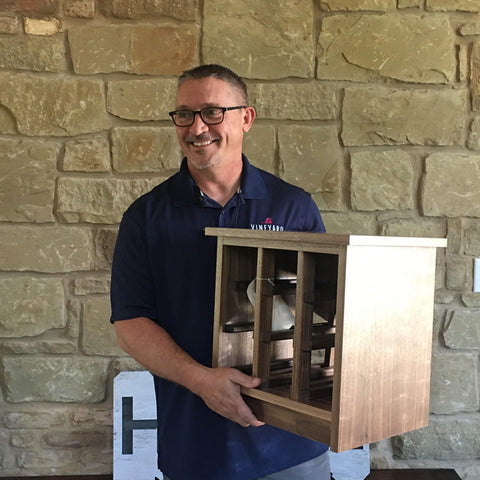
A wine box ceremony seals a bottle, often with letters, for an anniversary or meaningful future occasion. Choose the opening date before the wine.
- Ask the producer or retailer for a bottle with a drinking window covering that date.
- Label the opening date; record the wine and vintage separately.
- Store the bottle under suitable cellar conditions. If the decorative box cannot fit in controlled storage, keep the empty box and letters separately.
Consider a structured red, vintage Port, or cellar-worthy Champagne, confirming the specific bottle’s longevity. The box preserves the ritual, not storage conditions.
Save a bottle: cellaring wine for your anniversaries
Choose anniversary bottles by drinking window, not reception sentiment alone. Most wines are meant for early drinking; ask about the specific wine and vintage.
| Opening date | Bottle-selection task | Storage and records |
|---|---|---|
| First anniversary | Confirm the reception wine’s drinking window includes next year. | Record the wine and vintage; store cool and stable. |
| Fifth anniversary | Confirm a specific age-worthy red, Riesling, or Champagne’s drinking window. | Record the source of that advice and use controlled storage. |
| Tenth anniversary | Confirm a specific structured red, vintage Port, or cellar-worthy Champagne’s suitability for the date. | Monitor storage and review the drinking window. |
Label each bottle “anniversary reserve” before service. Record the producer, vintage, intended date, storage location, and drinking-window advice. If budget permits, buy a second bottle rather than relying on one irreplaceable keepsake.
Wine gifts for the couple: what to put on the registry
Buy for everyday home use, not a 100-guest reception. Wine Cellar HQ’s smaller wine cooler and rack options suit couples who approve the fit.
- Compact wine cooler: the Summit SWC1224B holds up to 21 bottles. Confirm dimensions, installation requirements, and the couple’s permission before adding a large gift.
- Small rack: the VintageView W Series Mini holds six bottles without a full-wall installation. Place it in a cool spot, not beside an oven or sunny window.
- Decanter: choose a stable, easy-to-clean design for couples who enjoy decanting; confirm they want one before prioritizing appearance.
- Cellar planning: reserve a cellar design consultation for couples already planning a wine room, rather than treating it as a universal gift.
For more ideas, see our gift guide for wine lovers.
Your wedding wine planning timeline
Work back from the wedding date. The biggest risk is buying late or storing badly, so lock in storage before the cases arrive.
| When | Actions | Have ready |
|---|---|---|
| 4 to 6 months ahead | Confirm BYO, corkage, bar style, and storage. | Approved plan and budget. |
| 2 to 3 months ahead | Taste, order, and arrange delivery. | Storage before cases arrive. |
| 1 month ahead | Review RSVPs, wine shares, and supplier deadlines. | Final bottle order. |
| 1 week ahead | Count bottles; confirm transport, refrigeration, and ice. | Labeled reserves and service plan. |
| Wedding day | Check temperatures and replenish chilled stock. | Keepsakes separate from bar stock. |
Provide food, water, alcohol-free choices, and safe rides home throughout the celebration.
Want this timeline on paper? Download the free printable planner, with checkboxes for every step.
FAQs
Can guests toast with still wine instead of sparkling?
Yes. Guests can toast with their existing wine or an alcohol-free drink. Buy separate sparkling only if you want to serve it.
Do you need a different wine for every course?
No. One adaptable white and one red can cover a mixed menu. Add another style only for a clear preference or pairing need.
Should the bar open every bottle before the reception?
No. Open bottles in service batches and keep reserves sealed. This also preserves any return eligibility allowed by your supplier.
Are screwcap wines suitable for a wedding?
Yes. Screwcap does not mean low quality; choose by taste, menu fit, and price rather than closure.
Does the wine cooler’s stated capacity include Champagne bottles?
Not necessarily. Capacity is often based on a standard bottle shape. Check usable space for your actual sparkling and still-wine mix.
What should you do if delivered wine has leaks or pushed-out corks?
Photograph the affected bottles, set them aside, and contact the seller before service. These signs can indicate storage or transport damage, but are not proof by themselves.
How much wine do you need for 100 guests?
For 100 adult drinking guests, a moderate starting order is 50 still-wine bottles plus 13 to 17 bottles for a separate sparkling toast. Adding a 10% reserve to each gives 70 to 74 bottles total. Longer wine-only receptions need more; exclude guests who will not drink alcohol.
Should you serve red or white wine at a wedding?
Serve both unless you know your guests prefer one. Start with an equal red-white split, then favor white and rosé for lighter summer menus or more red for beef and richer dishes. Guest preferences should guide the final quantities.
Can you buy wedding wine in advance?
Yes. Buying 2 to 3 months ahead allows time for sourcing and delivery. Confirm your venue’s BYO rules first, and have cool, stable storage ready before the bottles arrive.
How long can wine be stored before a wedding?
Unopened wine can be held for weeks or months if it remains within its drinking window and is stored under suitable conditions. There is no universal deadline: the specific wine, heat exposure, and temperature stability determine whether it will keep well.
What is a wine box ceremony?
A wine box ceremony is a modern wedding ritual where couples seal wine and handwritten love letters in a decorative box as a time capsule to open on a future anniversary or meaningful occasion. Choose a wine suited to that opening date, and store the bottle properly; the decorative box does not control temperature.
What’s a good wedding gift for wine lovers?
A compact wine cooler, small wine rack, or easy-to-clean decanter can make a useful gift when it fits the couple’s home and habits. A cellar consultation suits couples already planning a wine room. Check their registry and preferences before choosing equipment.
Buying Your Wedding Wine Early?
Keep it at cellar conditions until the big day, and start the collection you'll open on your anniversaries. When ready for permanent storage, we're here to help.