


Black Friday
Champagne & Magnum Wine Racks
Champagne racks are sized for wider, heavier sparkling and magnum bottles, which often won't fit a standard wine rack. Shop wall, peg and floor-to-ceiling racks, then use our free pairing guide below.
- Authorized dealer
- Price match guarantee
- We design, install & service cellars
Shop 17 WCHQ Champagne & Magnum Wine Racks Products
-
-
Black Friday
-
-
Black Friday
-
-
Black Friday
-
-
Black Friday
-
-
Black Friday
-
-
Black Friday
-
-
Black Friday
-
-
Black Friday
-
-
Black Friday
-
-
Black Friday
-
-
-
-
Black Friday
-
-
Black Friday
-
-
Black Friday
-
-
Black Friday
-
-


Free wine wall layout
Building a Champagne wall?
Send us a photo and your wall size. A specialist will suggest a layout for your Champagne and magnums, free.
Shop the look
Champagne Walls, Ready to Shop
Real installs from the brands we carry. Tap a dot to see the rack and its price.





Compare racks
Which Champagne Rack Fits Your Space?
Seven big-bottle racks we sell and install. Prices update live from the store.
| Rack | The look | Bottle sizes | Capacity | Best for | From | Link |
|---|---|---|---|---|---|---|
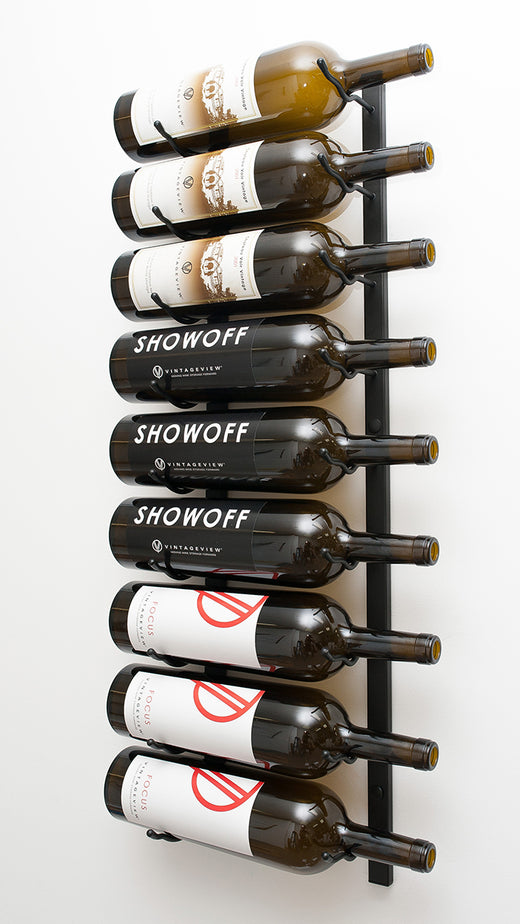
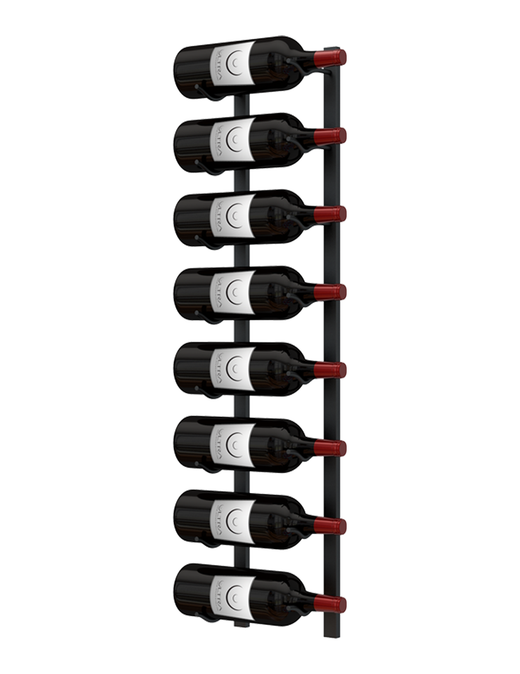
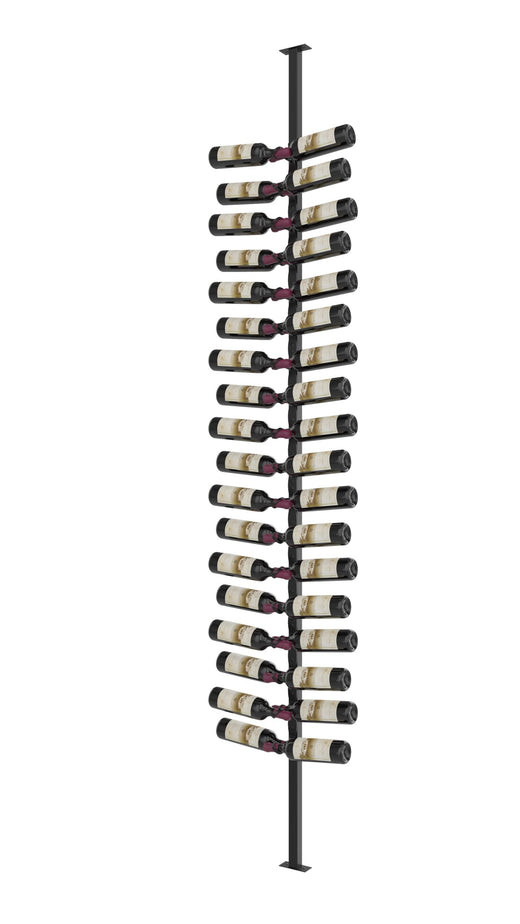
| VintageView Magnum/ChampagneBest fitMade for big bottles | Slim metal column, bottles appear to float | Champagne & magnum | 9 to 18 bottles per column | Champagne collectors, bar walls | $120 | Shop VintageView Magnum/Champagne |
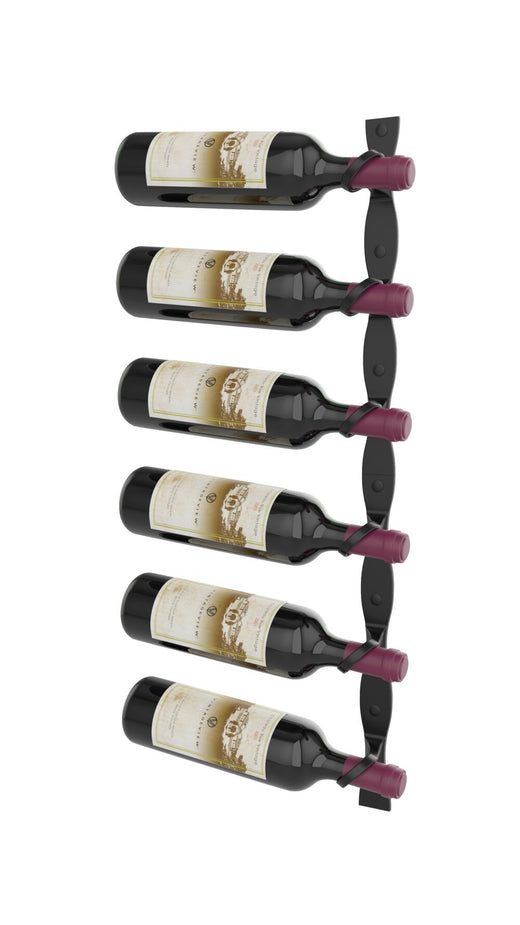
| VintageView Helix SingleMinimalist rods | Ultra-thin twisted rods | Standard, Champagne & magnum | 1 to 12 bottles per kit | Mixed collections, modern homes | $158 | Shop VintageView Helix Single |
| VintageView Helix DualTwo bottles deep | Twisted rods, double-deep | Standard & Champagne | 2 to 8 bottles per kit | More bottles on a narrow wall | $187 | Shop VintageView Helix Dual |
| VintageView Vino Pins MagnumSingle-bottle pegs | Minimal pegs in any pattern | Champagne & magnum | 1 to 2 bottles per pin | Accent walls, custom patterns | $49 | Shop VintageView Vino Pins Magnum |
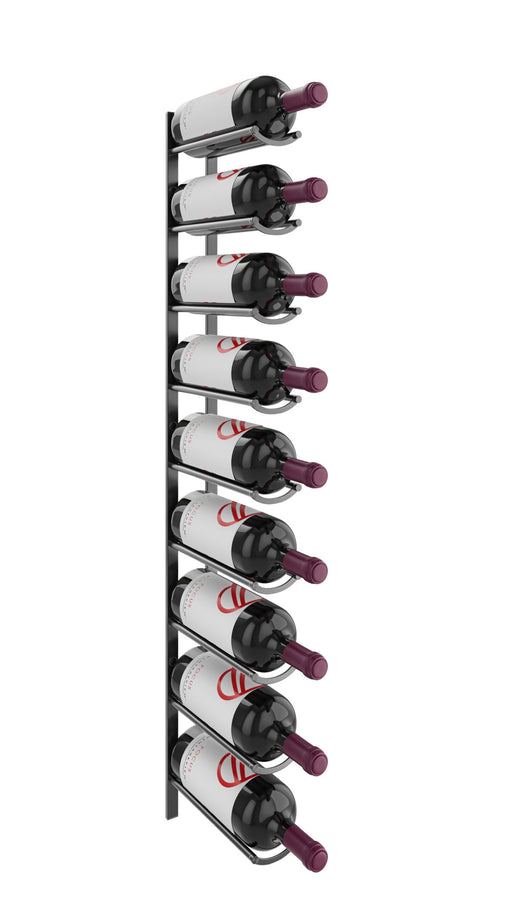
| VintageView Vino Rails Flex MagnumCork-forward column | Cork-forward, tilts up to 45 degrees | Magnum | 9 bottles | Narrow walls, design statements | $431 | Shop VintageView Vino Rails Flex Magnum |
| Ultra E-Series Magnum Wall RailsNewLabel-out rails | Horizontal rails, labels facing out | Magnum | 8 to 12 bottles | Dining rooms, above sideboards | $119 | Shop Ultra E-Series Magnum Wall Rails |
| Genuwine Elite Magnum ColumnSolid wood | Mahogany column rack, 85 in tall | Magnum | 17 bottles | Traditional wood cellars | $608 | Shop Genuwine Elite Magnum Column |
Buying guide
How to Choose a Champagne Rack in 4 Steps
Big bottles change the rules. Answer these four questions first.
-
Measure your biggest bottle
Compare Champagne racksChampagne bottles are about 3.5 in across and magnums are wider still, versus about 3 in for a standard Bordeaux bottle. Size the rack to the largest bottle you plan to keep.
-
One size or mixed?
Shop HelixIf Champagne shares the wall with still wines, Helix Single racks hold standard, Champagne and magnum bottles on the same rods. For a dedicated bubbly wall, choose a Magnum/Champagne column.
-
Label-forward or cork-forward
Compare racksLabel-forward shows off each bottle and is the most popular display. Cork-forward fits more bottles in less width.
-
Plan for the weight
Get a free layoutA full Champagne bottle weighs around 3.5 to 4 lbs and a magnum over 7 lbs. Mount into studs or masonry, not drywall anchors alone.
Champagne pairing guide
What to Pair With Champagne
Champagne pairs best when you match its style to the weight of the dish: light, mineral styles with seafood and appetizers, fuller styles with roast meats and mushrooms, and sweeter styles with dessert. Here's how each style eats, course by course.
Non-Vintage Brut
A blend of several years, made to taste consistent. The everyday, do-it-all style.
Body
Taste
Balanced and fresh, with fine bubbles and a clean finish.
Best with
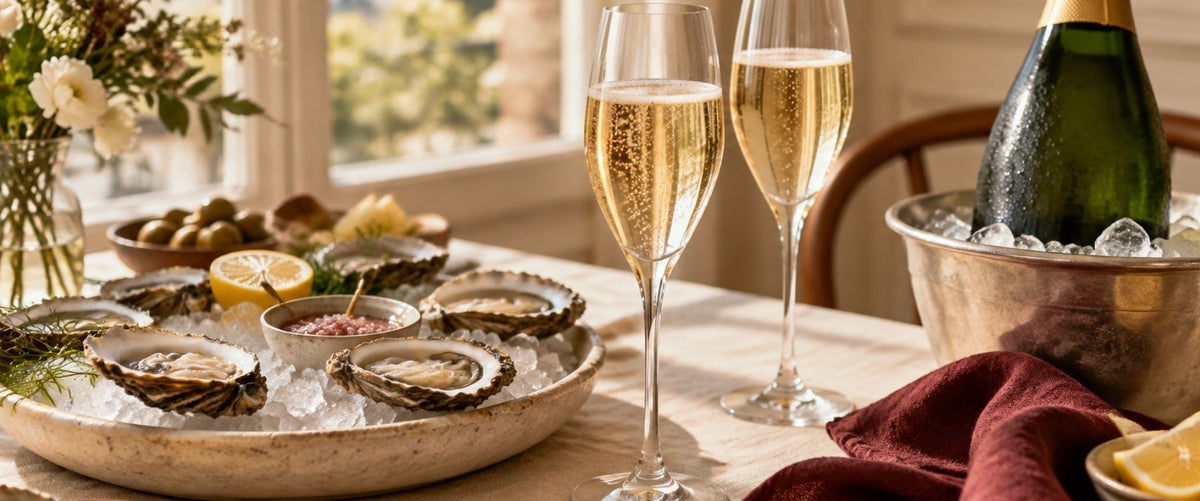
- Chips
- nuts & olives
- Fried food
- Shrimp & oysters
- Pizza & pasta
Why it works: Acidity and bubbles cut through richness and refresh the palate.
Blanc de Blancs
Made only from white grapes, usually Chardonnay.
Body
Taste
Light, elegant and floral, with citrus and mineral notes.
Best with
- Oysters
- Scallops
- Sushi
- Goat cheese crostini
- Delicate fish
Why it works: Finesse and minerality flatter delicate flavors without overpowering them.
Blanc de Noirs
Made only from black grapes: Pinot Noir and/or Meunier.
Body
Taste
Fuller and richer, with more structure and red-fruit notes.
Best with
- Roast chicken & turkey
- Duck
- Mushrooms
- Aged cheese
- Grilled meat
Why it works: Depth and texture stand up to richer, savory dishes.
Rosé Champagne
Pink Champagne, made by macerating black grapes or blending in a little red Champagne wine.
Body
Taste
Fruity and vibrant, with red-berry notes and a lively finish.
Best with
- Charcuterie
- Grilled salmon
- Duck
- Red-fruit desserts
Why it works: Fruit and freshness work with both savory and sweet dishes.
Vintage Champagne
Made from a single exceptional harvest and aged longer before release.
Body
Taste
Complex and layered, with toasty, nutty depth. Built to age.
Best with
- Game
- Truffle risotto
- Strong cheeses
- Celebrations
Why it works: Its complexity matches the richest dishes on the table.
Demi-Sec & Doux
The sweeter styles. Demi-Sec is off-dry; Doux is the sweetest.
Sweet
Taste
Rounder and softer, with honeyed fruit.
Best with
- Fruit crumble
- Fruit tarts
- Citrus desserts
- Chocolate
Why it works: A sweeter wine balances dessert instead of tasting sour next to it.
How dry is it? Read the label
The word on the label tells you the sweetness, in grams of sugar per liter. Watch out: "Extra Dry" is sweeter than "Brut."
- Brut Nature0–3 g/L
- Extra Brut0–6 g/L
- BrutUnder 12 g/L
- Extra Dry12–17 g/L
- Sec17–32 g/L
- Demi-Sec32–50 g/L
- DouxOver 50 g/L
DriestSweetest
Course by course
Champagne Through Every Course
Start light, finish rich: move from delicate styles to fuller ones as the meal goes on.
Aperitif
Pour
NV Brut, Blanc de Blancs, Rosé
Serve with
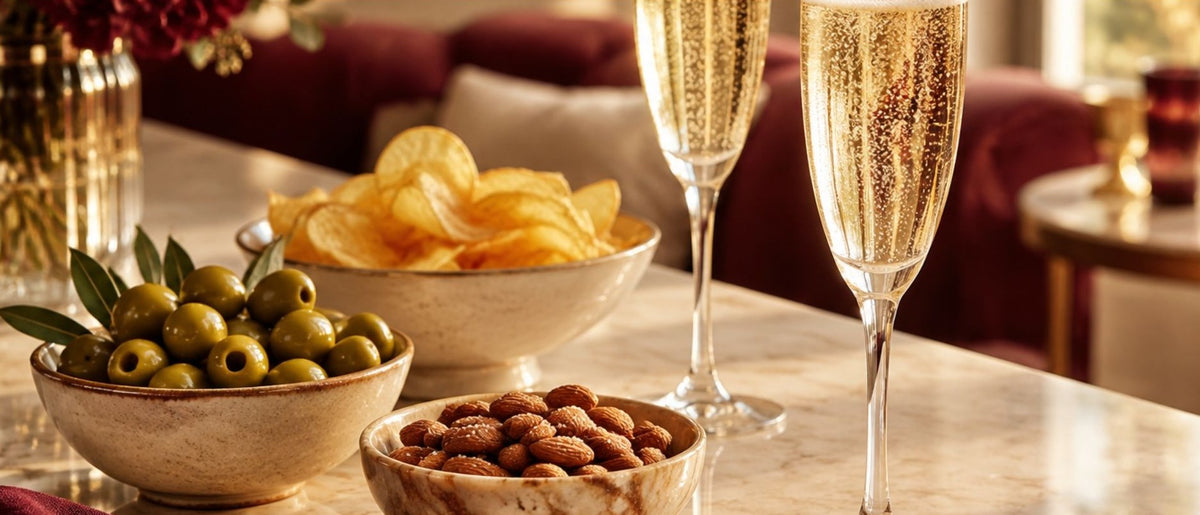
Chips, nuts, olives, bruschetta, light canapés, oysters, smoked salmon
Why it works: A lighter, drier Champagne wakes up the palate and prepares it for the meal.
Starters
Pour
Blanc de Blancs, NV Brut, Rosé
Serve with
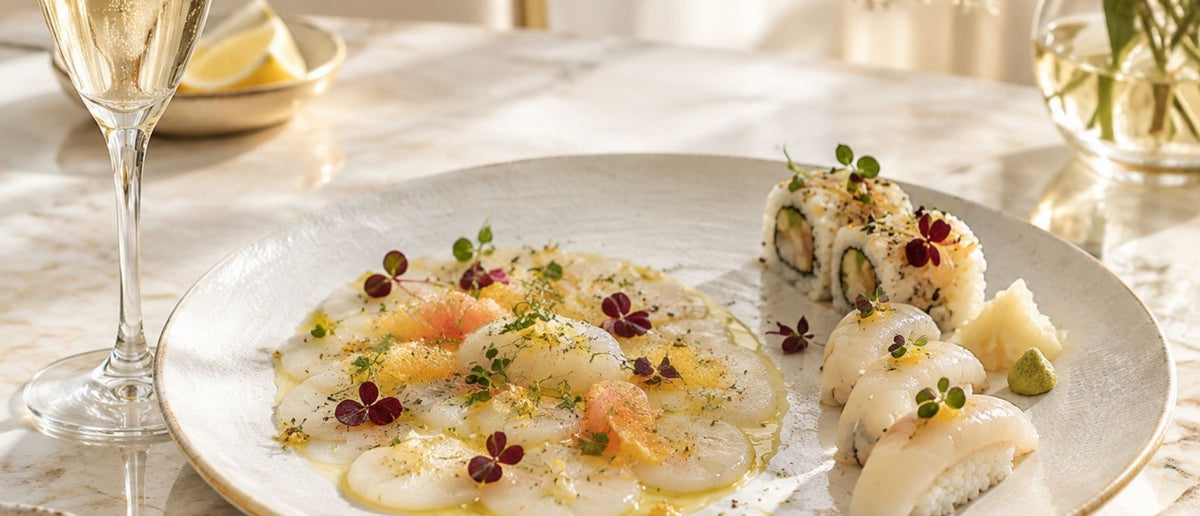
Sushi, scallop carpaccio, white fish tartare or ceviche, seafood pasta, soft cheeses
Why it works: Acidity and bubbles refresh the palate and complement delicate flavors.
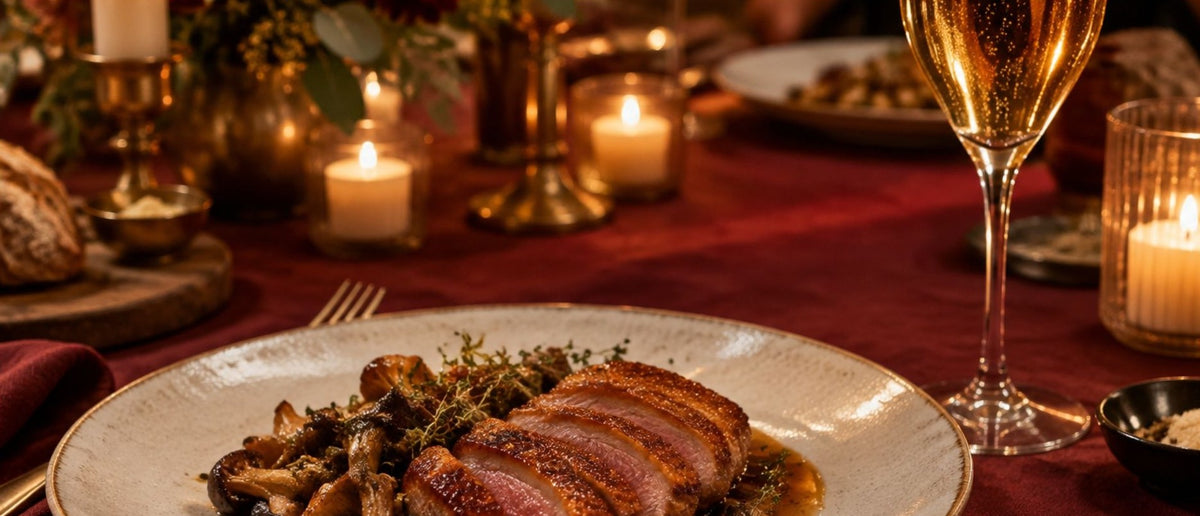
Mains
Pour
Blanc de Noirs, Vintage, NV Brut
Serve with
Roast chicken or turkey, duck, grilled meat, game, truffle risotto, pan-fried porcini
Why it works: Structure and depth stand up to richer, more savory dishes.
Cheese
Pour
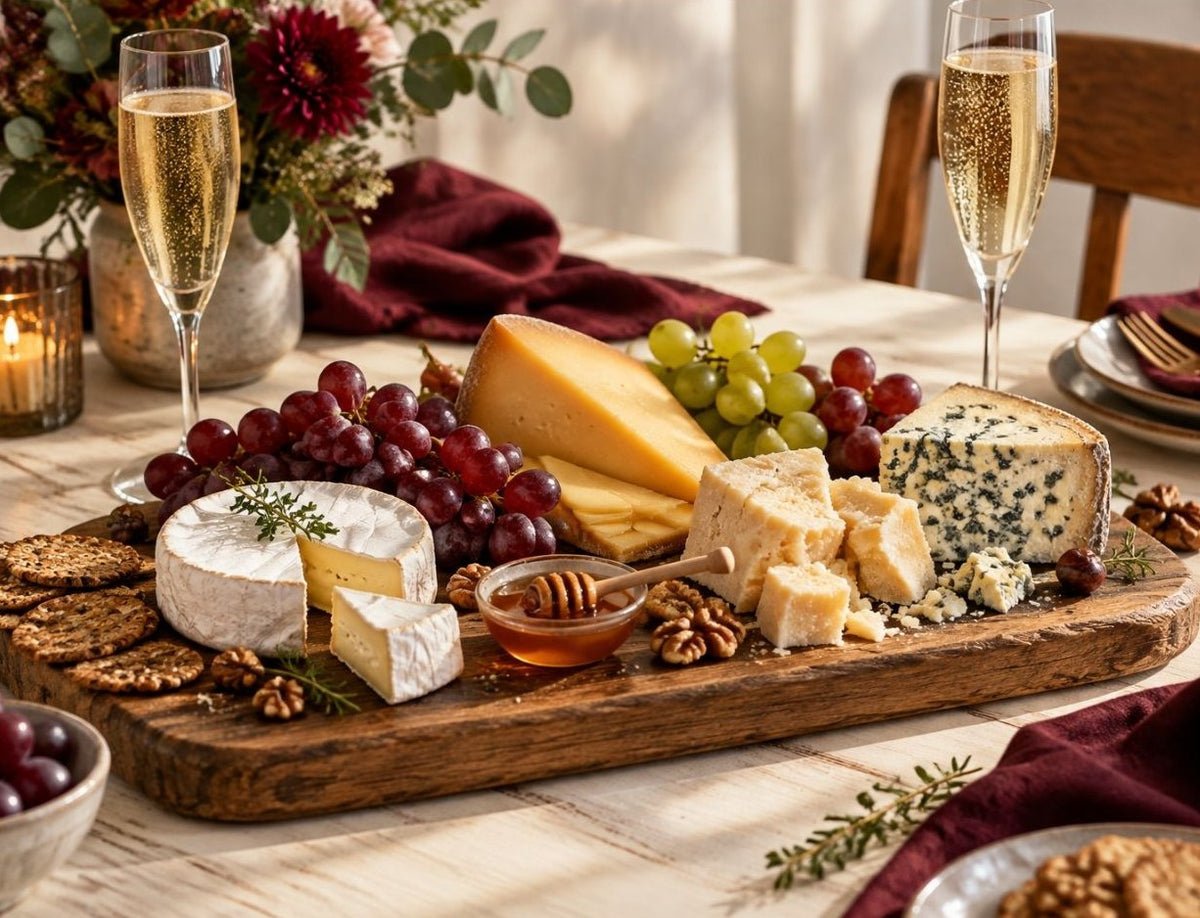
Blanc de Blancs for mild cheeses; Blanc de Noirs or Vintage for strong ones; Rosé in between
Serve with
Brie, Camembert, Parmigiano, aged Gouda, Roquefort, Stilton
Why it works: Bubbles and acidity cut through rich cheese, making Champagne a great alternative to red wine.
Dessert
Pour
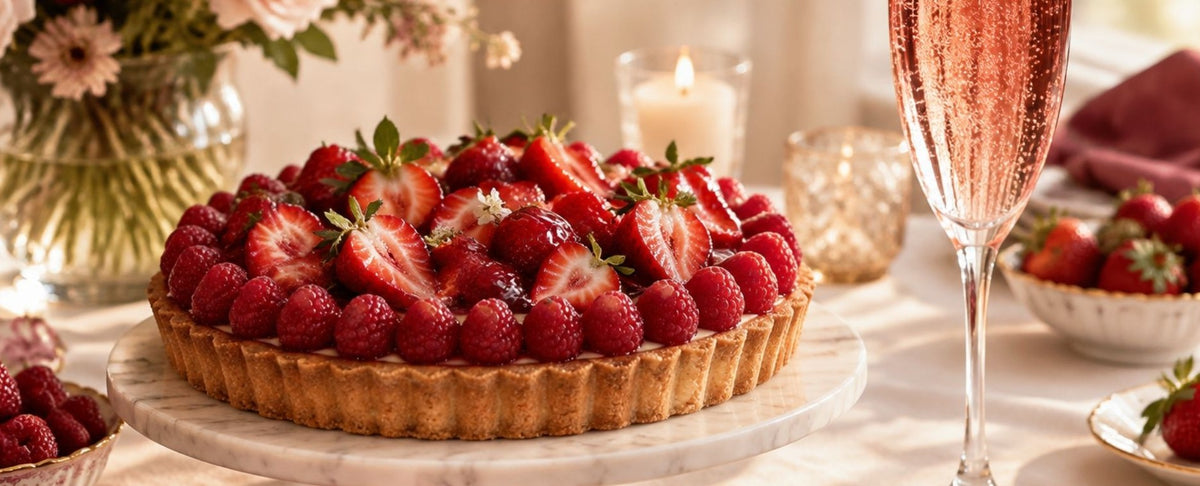
Demi-Sec, Doux, Rosé
Serve with
Fruit crumble, red-fruit tart, chocolate desserts, citrus desserts
Why it works: A sweeter Champagne balances the sweetness of dessert instead of clashing with it.
| Style | Main grape(s) | Taste | Best with |
|---|---|---|---|
| Non-Vintage Brut | Chardonnay, Pinot Noir, Meunier | Balanced, fresh | Almost anything |
| Blanc de Blancs | Chardonnay | Light, floral, mineral | Seafood, light appetizers |
| Blanc de Noirs | Pinot Noir, Meunier | Fuller, richer | Roast meats, mushrooms |
| Rosé Champagne | Pinot Noir + Chardonnay | Fruity, vibrant | Charcuterie, salmon, desserts |
| Vintage Champagne | Single-harvest blend | Complex, age-worthy | Rich dishes, celebrations |
Serve & store it right
Champagne by the numbers
46–50°F
Serving temperature8–10°C: chilled, not ice-cold
50–59°F
Storage temperatureA steady 55°F is ideal
60–80%
Storage humidityKeeps corks supple
1–2 days
Once openedWith a stopper, in the fridge
Store bottles away from light and vibration. Chill in an ice bucket (half ice, half water) for about 30 minutes, or a few hours in the fridge.
Quick rules
4 Champagne Pairing Rules to Remember
Keep these in mind and you can pair Champagne with almost any menu.
-
Start light, finish rich
Open with NV Brut or Blanc de Blancs, then move to Blanc de Noirs or Vintage as the meal goes on.
-
Match intensity
Light dishes with light Champagnes; rich dishes with fuller styles.
-
Let bubbles cut richness
Acidity and bubbles make Champagne a great partner for fried, fatty and creamy foods.
-
Don't fear dessert
Get the printable guideA Demi-Sec or Rosé is a better match for sweet dishes than a dry Brut.
FAQs
Champagne Storage & Rack Questions, Answered
What Champagne lovers ask our specialists before they buy.
What is the best wine rack for Champagne bottles?
The best Champagne rack is one sized for big bottles. The VintageView Magnum/Champagne column is built for Champagne and magnums and holds 9 to 18 bottles label-forward. If Champagne shares the wall with still wines, VintageView Helix Single racks hold standard, Champagne and magnum bottles on the same rods.
Do Champagne bottles fit in a standard wine rack?
Often not. Most rack cradles are sized for 750 ml Bordeaux-style bottles, about 3 in across. Champagne bottles are about 3.5 in across, so they sit too tight or don't fit at all. Choose a rack listed for Champagne or magnum bottles.
Should Champagne be stored on its side or upright?
For long-term aging, store Champagne on its side, like still wine. For weeks or a few months, upright is fine too, because the pressure inside the bottle keeps the cork moist. A rack that holds bottles on their side also saves space.
How should you store Champagne at home?
Store Champagne somewhere dark, still and cool: 50–59°F (a steady 55°F is ideal) with 60–80% humidity, away from sunlight and vibration. A wine rack in a cooled wine room, or a wine cooler, gives it those conditions.
How long does Champagne last?
Unopened non-vintage Champagne is best within about 3–4 years; vintage Champagne can age 5–10 years or more when stored well. Once opened, reseal it with a Champagne stopper, keep it in the fridge and finish it within 1–2 days.
What temperature should Champagne be served at?
Serve Champagne at 46–50°F (8–10°C): chilled but not ice-cold. Put the bottle in an ice bucket filled with half ice and half water for about 30 minutes, or in the fridge for a few hours.
Can you store Champagne in the fridge?
For a few days before serving, yes. For months, no: a kitchen fridge is colder and drier than a cellar and its vibration can affect the wine. For longer storage, use a wine rack in a cool room or a wine cooler set to about 55°F.
What food goes with Champagne?
Champagne pairs with more than people expect. NV Brut and Blanc de Blancs suit oysters, sushi, fried food and appetizers; Blanc de Noirs and Vintage suit roast chicken, duck and mushrooms; Demi-Sec and Rosé suit fruit desserts. See the pairing guide above, or download the free printable version.
What are the Champagne bottle sizes?
The common sizes are the split (187.5 ml), half bottle (375 ml), standard bottle (750 ml), magnum (1.5 L, two bottles) and Jeroboam (3 L, four bottles). The racks in this collection fit standard Champagne bottles and magnums; larger formats need custom racking.
Do I need a Champagne fridge?
Not necessarily. A wine rack works for storage in a room that stays cool and steady. If your home runs warm, a wine cooler keeps bottles at cellar temperature, and a dual-zone model lets you keep a second zone colder so Champagne is ready to serve.
Buying guide
About Champagne & Magnum Wine Racks
A Champagne rack is a wine rack sized for wider, heavier sparkling and magnum bottles. Champagne bottles are built thicker to hold the pressure inside, so a typical bottle is about 3.5 inches across, compared with about 3 inches for a standard Bordeaux bottle. That's why Champagne often won't sit properly in a regular wine rack cradle. Magnums (1.5 L) are wider still.
Every rack in this collection is sized for Champagne, sparkling or magnum bottles: label-forward VintageView Magnum/Champagne columns, the minimalist Helix series (Helix Single racks hold standard, Champagne and magnum bottles on the same rods), Vino Pins and Vino Rails magnum pegs for custom patterns, Ultra E-Series Magnum Wall Rails and a solid-wood magnum column.
How to store Champagne at home
Keep Champagne somewhere dark, still and cool, at 50–59°F (a steady 55°F is ideal) and 60–80% humidity, the same as your still wines. For long-term aging, store bottles on their side; for a few weeks or months, upright is fine because the pressure inside keeps the cork moist. Chill to 46–50°F only before serving. A rack displays and organizes bottles but doesn't control temperature, so for aging, install it in a cooled wine room or pair it with a wine cooler.
Planning a Champagne wall for a bar or celebration space? Our Wine Cellar Specialists will lay it out for you, free.
Free design help
Plan Your Champagne Wall With a Specialist
Tell us about your space and your bottles. A Wine Cellar Specialist will suggest a layout, check the mounting and weight, and price it before you order anything.
- Free 30-minute design consultation
- 100% Price Match Guarantee
- Authorized dealer for every brand we sell
Or call 888-589-1833

Free printable · 3 pages
Free Champagne Pairing Guide
Everything on this page in a printable cheat sheet for your next dinner party: six Champagne styles, what to pour with every course, the sweetness scale and how to serve and store it.
6 styles · 5 courses · Sweetness scale · Serving & storage cheat sheet
Your guide is ready. Cheers!
Download it now and keep it handy for your next celebration.


